

The complete guide
How to choose a mens messenger bag
Why a messenger bag at all
A messenger bag sits across the body, opens from the front, and lets you reach your things without taking it off. That is the whole argument. A backpack has to come off your shoulders before you can get to anything. A briefcase ties up a hand.
For commuting, university, client visits and travel days, that difference matters more than any single feature. The bag you can open one-handed on a platform is the bag you actually use.
There is also the way it looks. A messenger reads as work-ready without being stiff. It suits a suit and it suits jeans, which is more than most bags can say.
Canvas, leather, or both
Material decides how a bag ages and what it weighs.
Full leather is the classic. It is durable, it dresses up well, and it develops a patina. It is also heavier, and it wants to be kept out of the rain.
Canvas is lighter and tougher against scuffs, and a treated canvas shrugs off drizzle. On its own it can look casual to the point of scruffy.
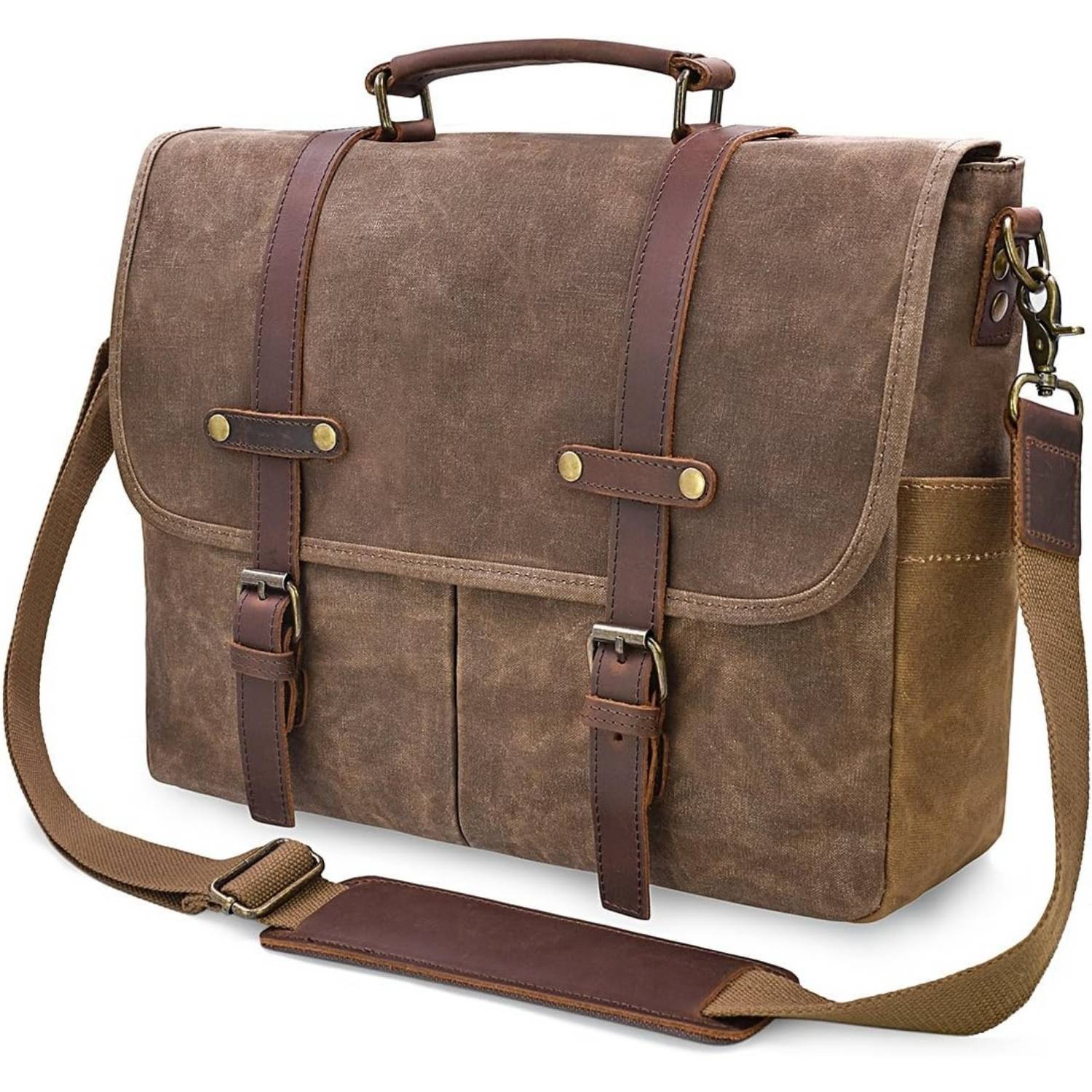
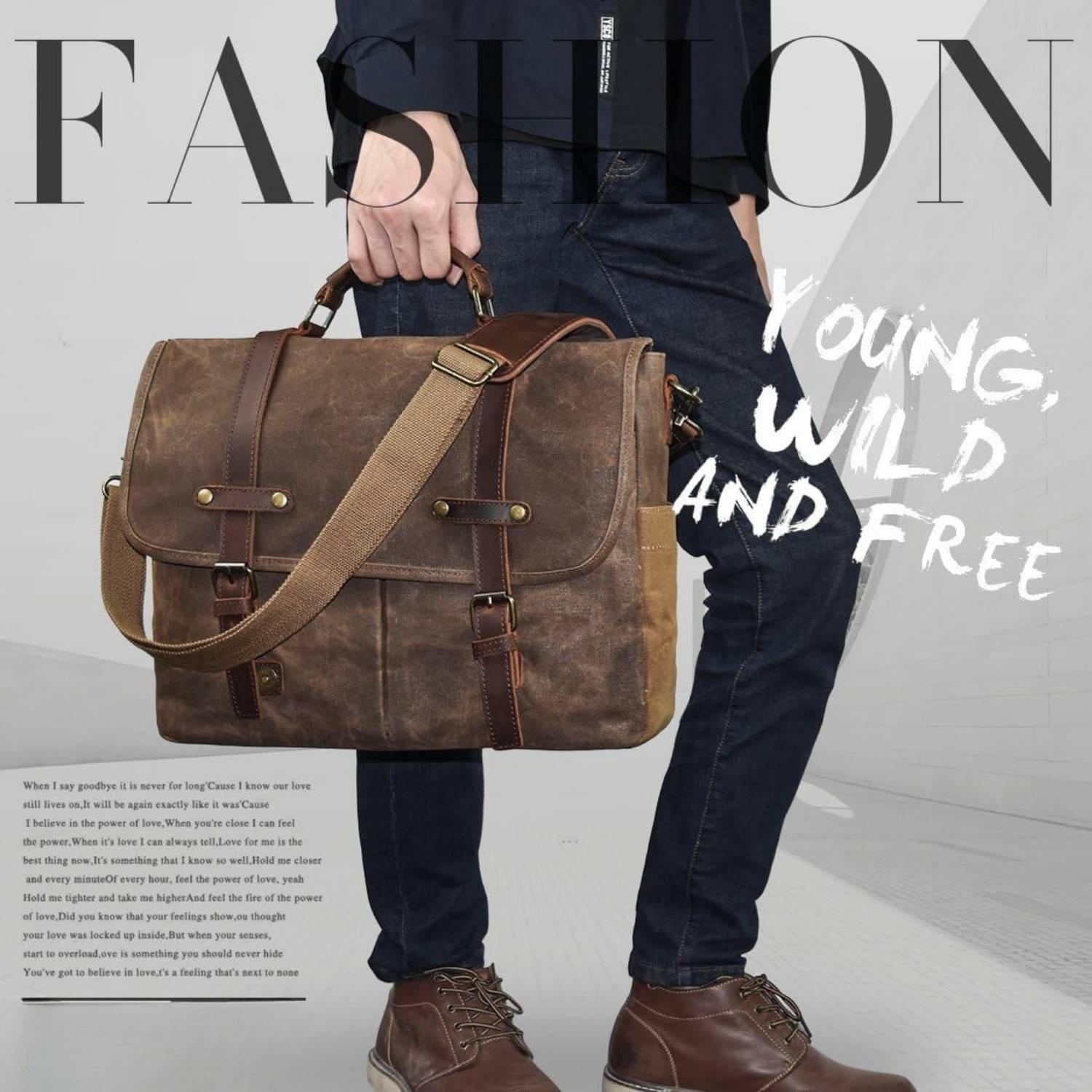
The combination used here, a water-resistant canvas body with a crazy horse cowhide leather strap, is a deliberate middle path. The canvas keeps the weight down and handles weather. The leather is where your hand and shoulder actually touch the bag, which is where leather earns its keep. Crazy horse leather is finished so that scratches and wrinkles show as shading rather than damage, so the vintage look is a feature, not a flaw to protect.
Pockets: count them, then picture them
A bag with one big cavity turns into a bucket. Everything sinks, and you fish.
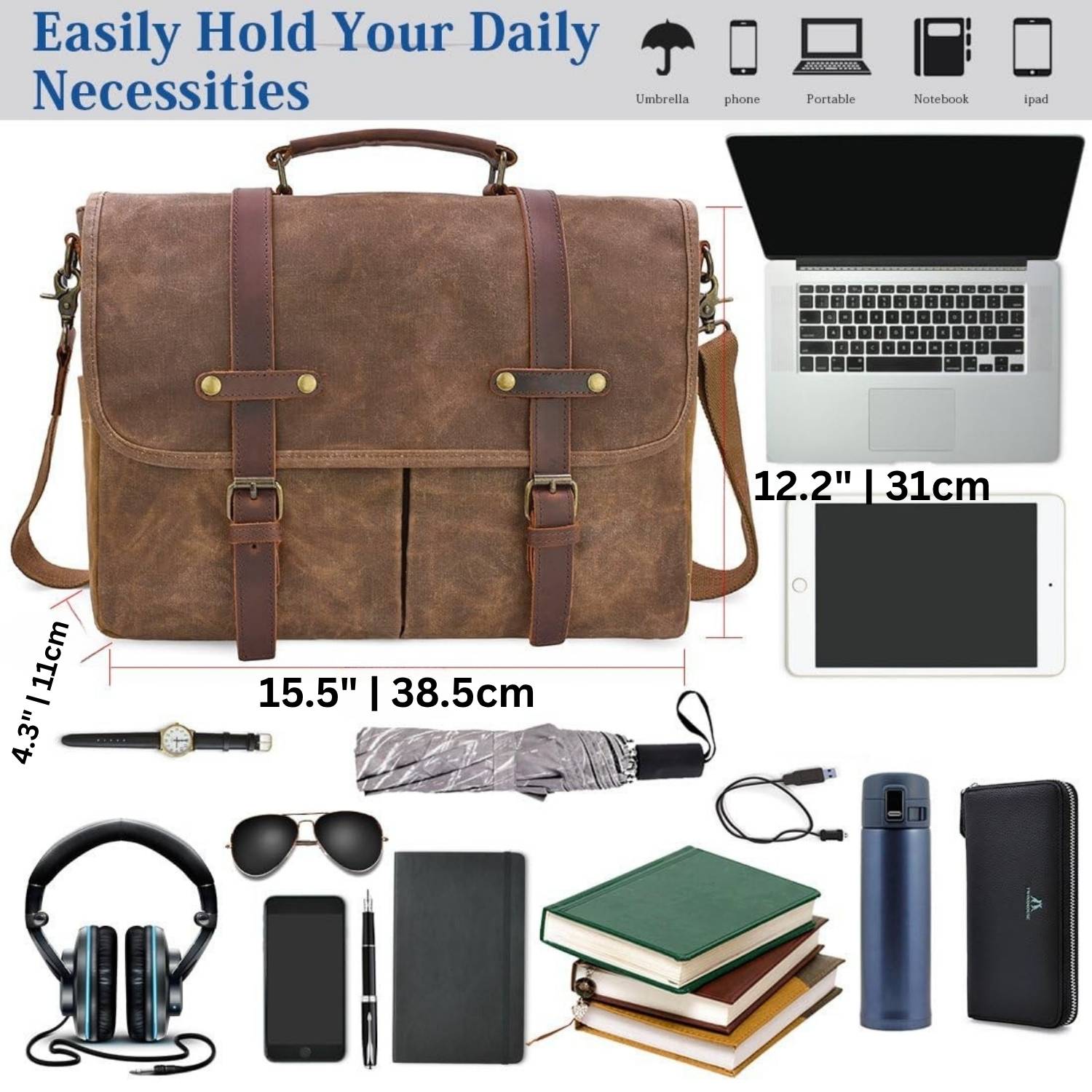
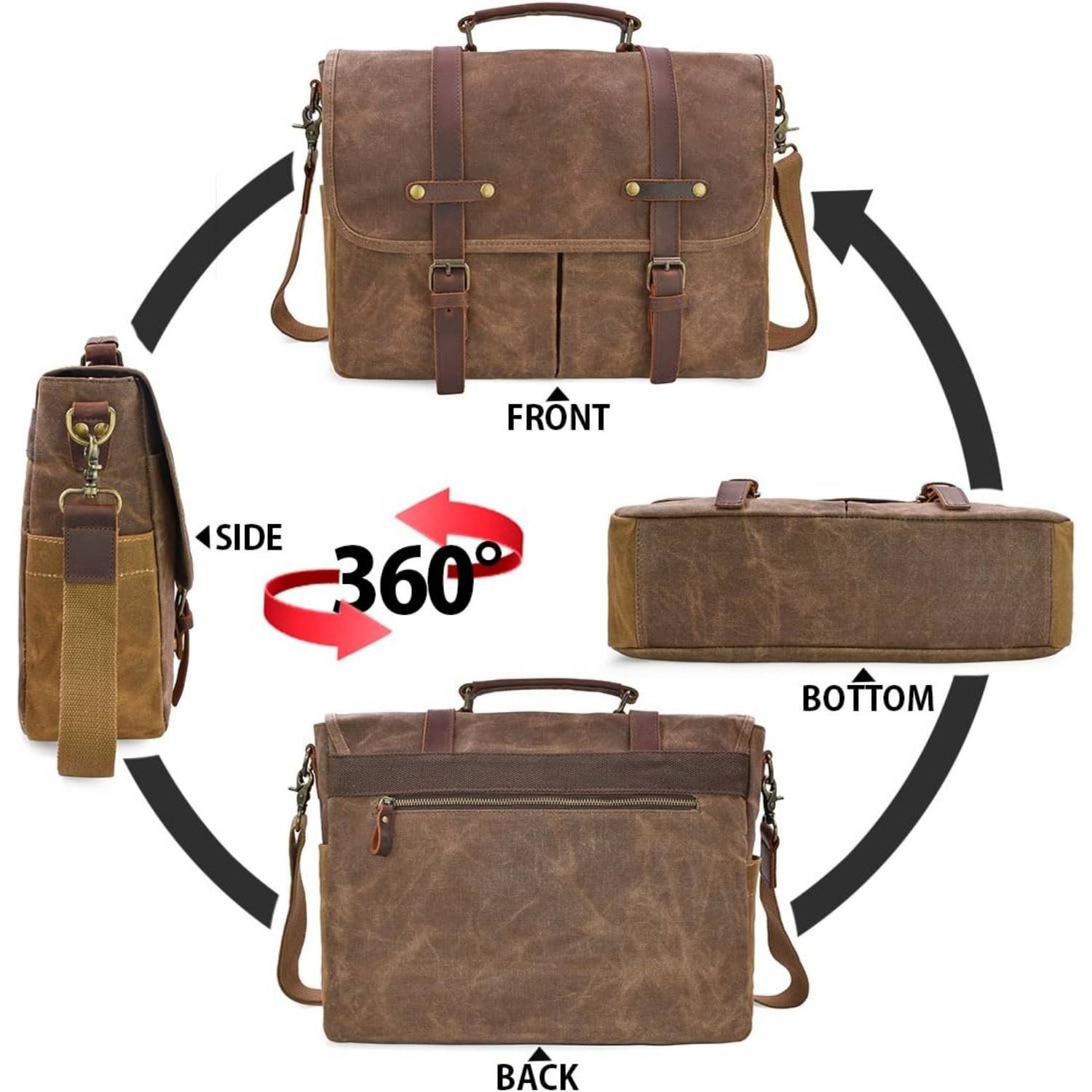
The fix is structure. This bag has 9 pockets: 5 outer and 4 inner. Before you buy any messenger bag, run the same check with your own carry. Phone, wallet, keys, charger, bottle, umbrella, notebook. If each item has an obvious home, the bag will stay organized on its own. If two or three items share a pocket, they will fight for it every day.
Outer pockets are for things you reach for while moving: phone, travel card, keys. Inner compartments are for things that need protecting: laptop, documents, cables.
The laptop question
Measure your laptop before you trust any listing. Screen size is not shell size, and two 15.6-inch laptops can differ by an inch of plastic.
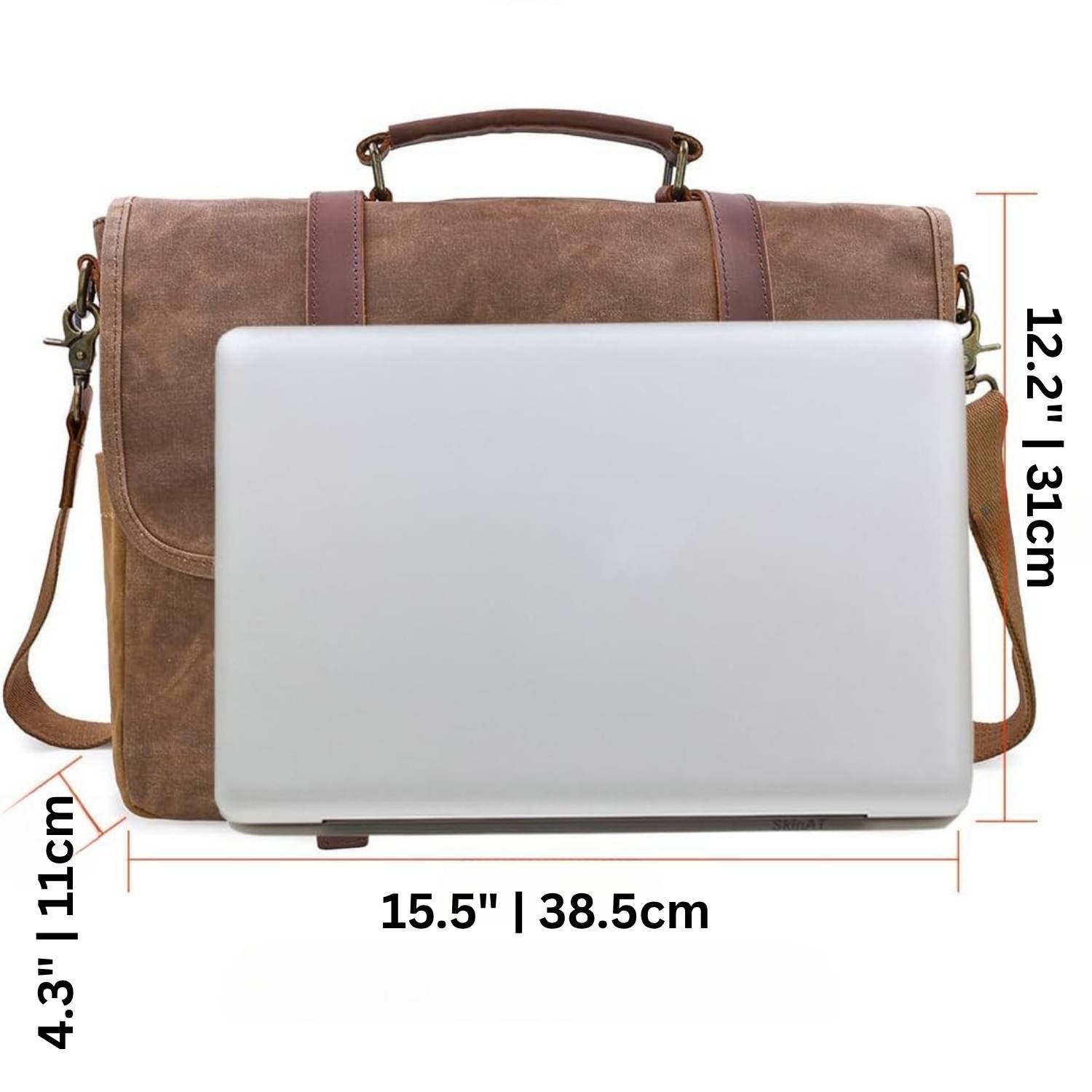
The padded sleeve in this bag measures 15.0 by 9.5 inches and fits most 15.6-inch laptops, with a seal that holds the device steady rather than letting it slide about. The honest caveat, straight from the listing: larger gaming laptops may not fit, because their shells are deeper and their hinges bulkier than standard machines.
Padding matters as much as fit. A sleeve that grips the laptop stops it drumming against the frame of the bag every time you take a step.
Closures and security
A flap with a single snap is quick but casual about your belongings. A zipper alone is secure but slow.
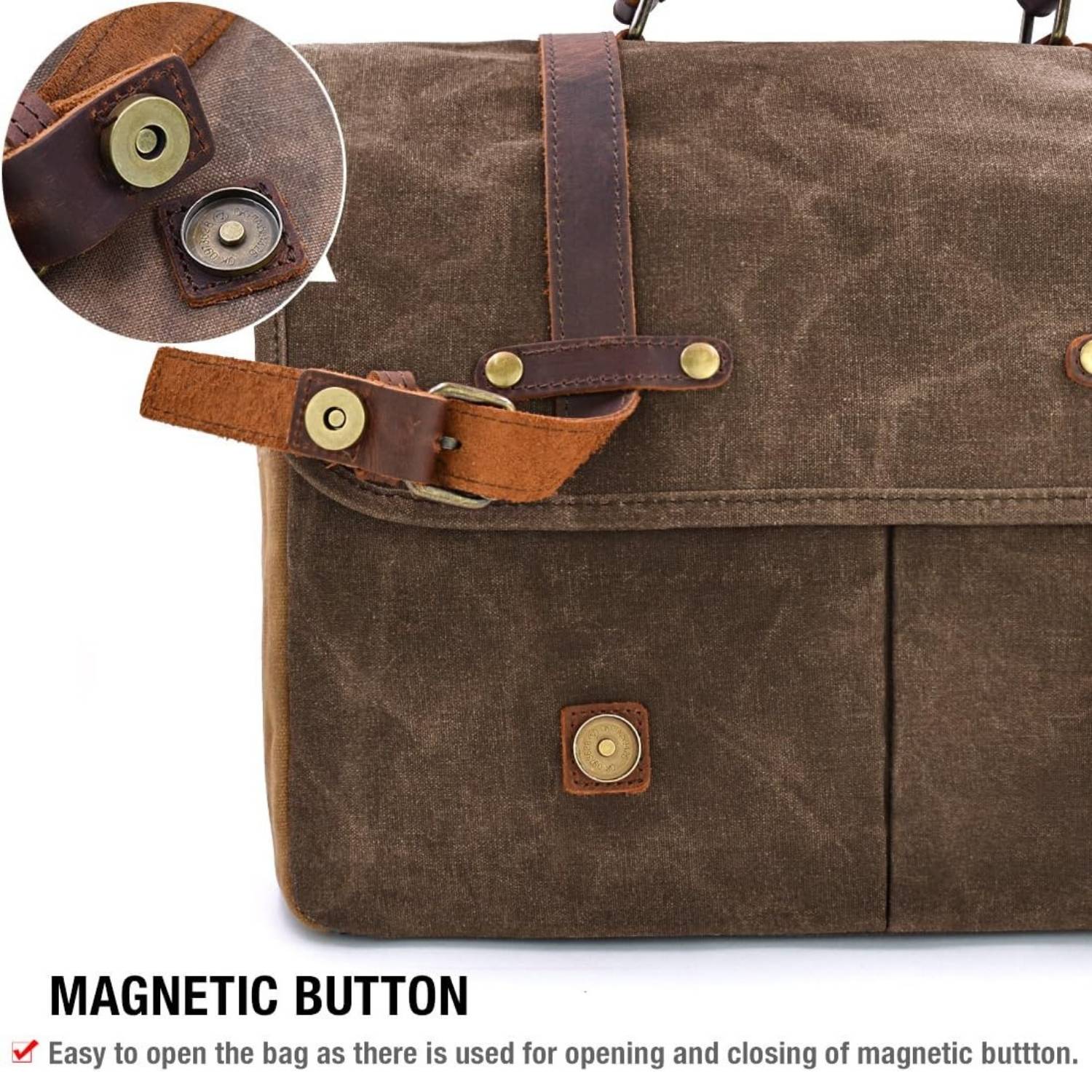
This bag uses both: magnetic snaps on the flap for speed, zippers underneath for security. On a commute or in a crowd, that second layer is the difference between peace of mind and a hand checking the flap every few minutes.
The strap does more work than you think
Weight you carry for an hour is a strap problem, not a bag problem. Look for three things: adjustability, so the bag sits at your hip rather than swinging at your knee; padding, because a thin strap concentrates the whole load on one line of shoulder; and a detachable fitting, so the bag can be carried by the handle into a meeting.
This one has all three. The strap is detachable and adjustable, and both the strap and the handle are padded, which is what lets a 1.3 kg bag plus a laptop stay comfortable across a full day.
Sizing it to your life
The 15-liter capacity here is the useful middle of the range. It swallows a laptop, a folder, a lunch and a light layer without ballooning into luggage. If your daily carry is only a tablet and a wallet, a smaller bag will look more deliberate. If you regularly carry a change of clothes or camera gear, you want a true daypack instead.
Exterior dimensions are 15.5 by 4.3 by 12.2 inches. The slim 4.3-inch depth is worth noticing: it is what keeps the bag flat against your body instead of jutting out into doorframes and train aisles.
Styling it
With jeans and a tee, the distressed canvas and leather read relaxed and lived-in. With chinos and a button-up, the structure and the leather strap carry the outfit toward smart-casual. It will sit happily next to a suit in most offices, though for formal legal or finance settings a rigid leather briefcase still signals harder.
Caring for it
Wipe the canvas with a damp cloth and let it air dry away from heat. Give the leather strap a little conditioner every few months. Store the bag empty rather than leaving it loaded, so the strap and seams are not under tension for nothing. That is the whole routine.
The short version
Choose a messenger bag by walking through one ordinary day: what you carry, how often you open the bag, how long it hangs on your shoulder. Nine pockets, a padded 15.6-inch sleeve, a double-secured flap and a padded, removable strap answer that day well, which is exactly why this bag is built the way it is.