
The complete guide
How to Choose a Mens Leather Wallet That Lasts
The problem with most wallets
Wallets fail quietly. The stitching holds, the leather looks fine, and yet one day you realise you have been carrying a lump the size of a sandwich in your back pocket for two years. Or the opposite happens: you buy something minimal, love it for a month, then start leaving your licence in the car because there is nowhere to put it.
The reason is simple. Most wallets are designed for one scenario. A big organiser assumes you always want every card. A slim card sleeve assumes you never do. Real life swings between the two. On Monday you need the work pass, three bank cards, a transport card and a receipt you promised to keep. On Saturday you want a licence and one card in a pocket with no weight in it.
This bifold handles that by being two things at once. The shell is the full wallet, with ten card slots, sixteen compartments and eighteen pockets. Inside it sits a removable ID and card holder that lifts straight out. When you want less, you take less, and nothing gets left behind in a drawer.
What full grain leather actually means
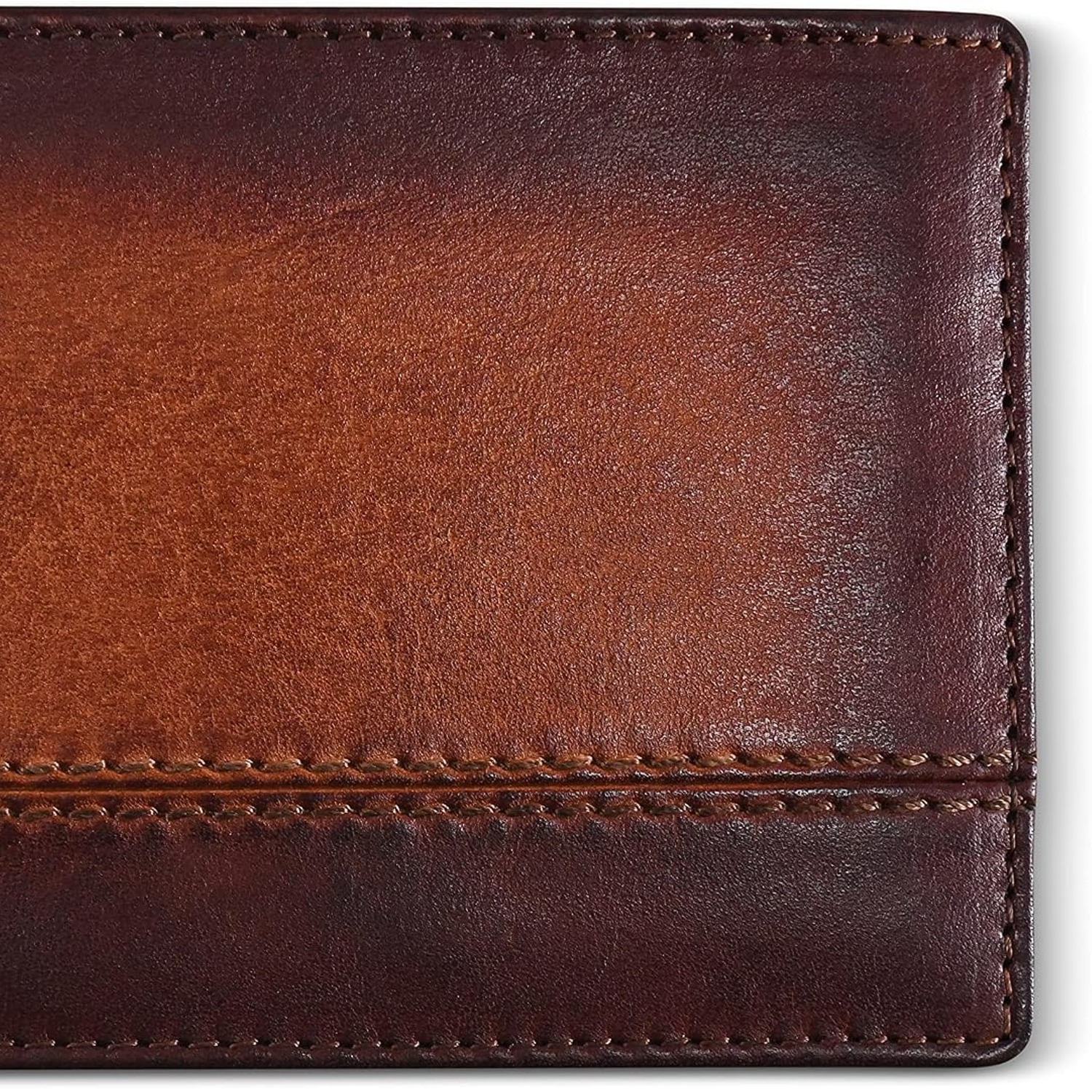
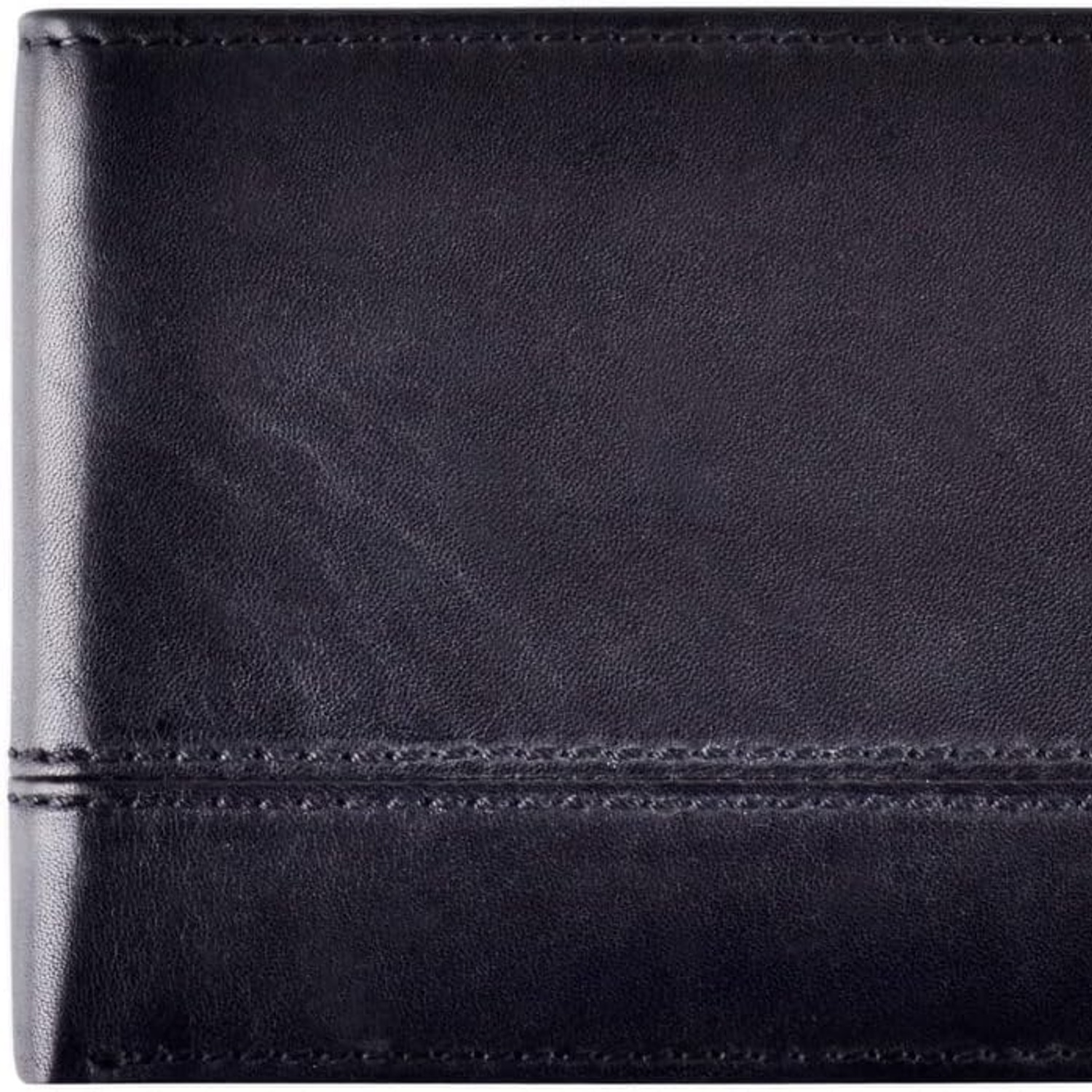
Leather grading is one of those areas where the words sound impressive and mean very little unless you know the hierarchy. Full grain is the top layer of the hide with the natural grain surface intact. Nothing has been sanded off to hide blemishes, and nothing has been sprayed on to fake a texture.
That matters for two reasons. First, the grain is where the fibres are densest, so full grain resists wear better than corrected or split leather. Second, it ages instead of degrading. Creases form along the fold. The colour deepens where your hand touches it most. After a year, a full grain bifold wallet looks lived in rather than tired.
The lining here is leather too. That is less common than you might think, because a fabric lining is cheaper and lighter. The downside of fabric is that it frays at the slot edges long before the outside shows any wear. Leather on leather wears at a more even rate.
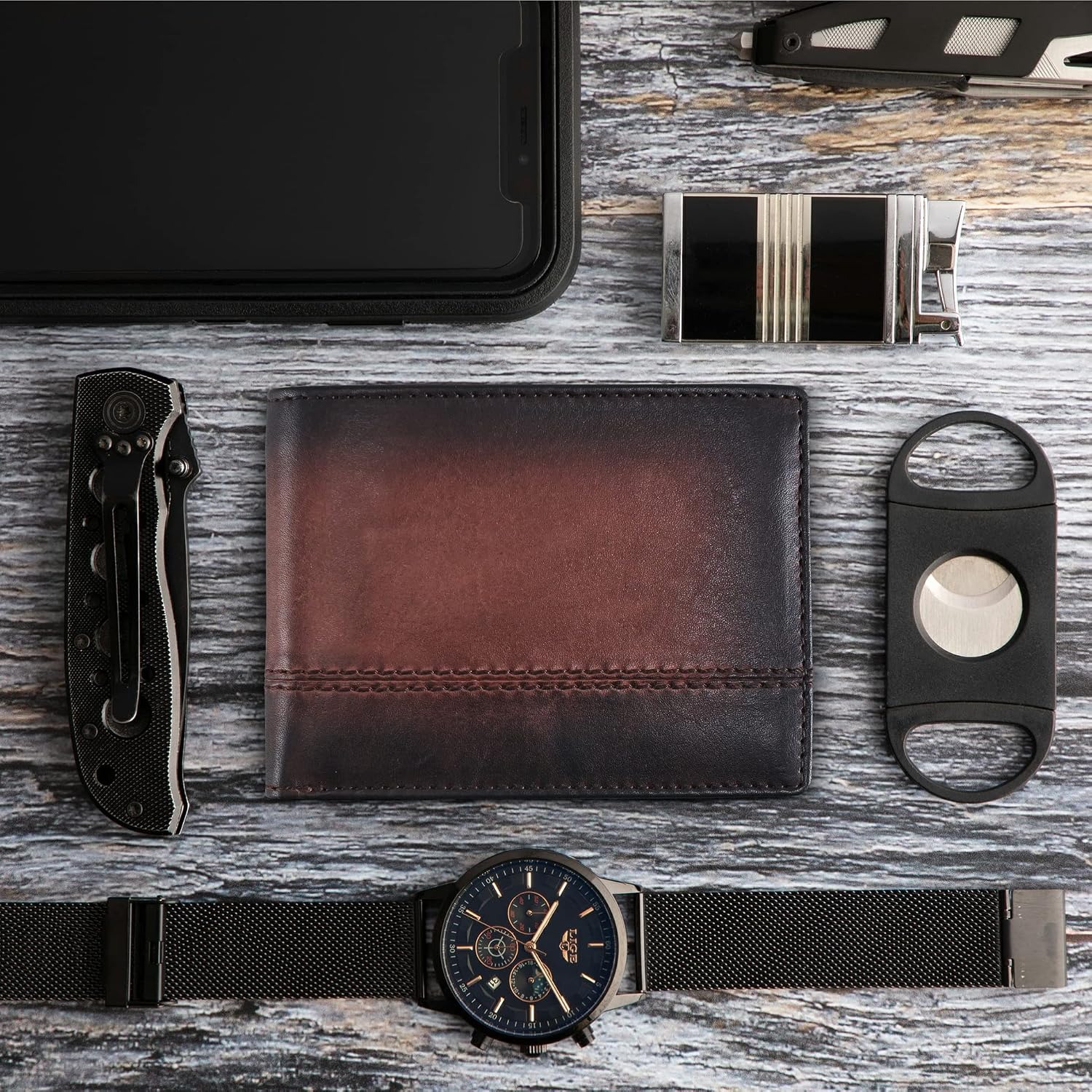
The colour is burgundy rich brown. Because it is a natural material, expect small variations in tone and grain between individual wallets. That is the material behaving normally, not a defect.
How the removable insert changes things
The insert is the part most people end up talking about. It is a slim card holder with an ID window that separates from the main body of the wallet. You can run it as your whole wallet when you want to travel light.
A few ways people use it. Gym bags, where a full wallet is a liability and a locker is small. Cycling, where anything in a back pocket gets uncomfortable within twenty minutes. Festivals and concerts, where you want a licence, a card and a folded note and nothing else. Airports, where you can keep boarding documents and ID in the insert and leave the loyalty cards in the shell in your bag.
It also helps with organisation generally. Cards you use daily go in the insert. Cards you use monthly stay in the shell. That stops you flicking through ten slots at a checkout while a queue builds behind you.
RFID blocking, explained without the scare stories
Contactless cards work by answering a radio signal from a reader. That is the whole trick. Hold the card close enough to a powered reader and it responds with enough data to run a transaction. A blocking layer sits between the outside world and your cards, so a reader held near your pocket struggles to get an answer.
Is digital pickpocketing the biggest threat to your money? Honestly, no. Card fraud is far more likely to start with a compromised website than with somebody standing behind you on a train. But the blocking layer costs you nothing in daily use, and it is reassuring in dense crowds and busy transport hubs. Think of it as a locked door on a quiet street. You still lock it.
One practical note: blocking only works while the wallet is closed. Pull a card out to tap and it behaves exactly as normal.
Who this suits, and who it does not
This is a good fit if you carry a reasonable number of cards and want one wallet that can shrink. It suits people who move between work and weekends with different needs, and anyone who likes the idea of a mens leather wallet being the one that adapts rather than the one with the most sleeves.
It is less of a fit if you carry a lot of loose coins. The pocket description lists slip-in pockets, with no zipped coin pouch specified. If change is a daily reality for you, pair the wallet with a small coin purse or plan to use a tray at home.
It is also not a minimalist card holder in its full form. With all ten slots loaded, it is a proper bifold and has the thickness to match. If you want the thinnest thing possible all the time, carry the insert and leave the shell at home.
How to choose between wallet styles
A short way to think about it. Count the cards you actually touch in a normal week. If that number is three or four, a slim bifold leather wallet or a card holder is enough. If it is seven or more, you want something with real capacity, because cramming cards into too few slots stretches leather permanently and the wallet never recovers its shape.
Then think about notes. Bifolds hold notes flat and full length, which keeps them neat and makes them quick to pull. Card holders usually mean folding notes in half or in quarters.
Finally, think about ID. If you show a licence or a pass often, an ID window saves real time. If you never show ID, a window is just an extra layer you did not need.
Looking after it
The care instruction is simple: clean with a dry cloth. That covers most of what leather needs. Dust and surface marks come off with a soft cloth and a bit of patience.
Keep it out of prolonged damp. If it does get soaked, blot it dry and let it finish drying at room temperature, away from radiators and direct sun. Fast heat drives moisture out of the fibres too quickly and leaves the leather stiff.
Do not overload the slots. A single card per slot keeps the pockets snug. Two cards doubled up will stretch the opening and it stays stretched.
If you want to condition it occasionally, use a small amount of a neutral leather conditioner and test it on a hidden spot first. Less is more. Over-conditioning makes leather soft and floppy, which is not what you want in a wallet that needs to hold its shape.
The short version
A bifold in full grain cow leather with a leather lining, measuring 4.5 by 3.5 inches and weighing 0.11 kg. Ten card slots, sixteen compartments, eighteen pockets, no closure, RFID blocking built in, and a removable ID window insert that doubles as a standalone card holder.
Buy it if you want one wallet that works for a full working week and still shrinks to pocket size on a Saturday. Skip it if you need a coin pouch or you only ever carry two cards. And if you are buying it as a gift, leather is one of the few things that genuinely looks better after a year of use than it did in the box.