
The complete guide
How to Choose a Leather Duffle Bag That Lasts
The bag that keeps getting replaced
There is a specific kind of annoyance that comes from a travel bag failing mid-trip. A zipper splits as you are repacking in a hotel room. A strap clip snaps at an airport. The coated fabric on a cheap holdall starts flaking off in your car boot and leaves little black crumbs everywhere. None of it is a disaster, but it happens often enough that most people have owned four or five bags for the same handful of trips.
The reason is simple. Most mid-price travel bags are built from coated polyester or split leather with a sprayed finish. Both look good for a year. Both rely on a surface layer that sits on top of the material rather than being part of it, and surface layers crack, peel and scuff down to the pale stuff underneath.
Full grain leather works the other way round. There is no coating to lose, because the surface you see is the actual outer face of the hide. When you knock it, you get a mark instead of a wound. That is the whole argument for buying a leather duffle bag once instead of a synthetic one repeatedly.
What full grain actually means
Leather grading confuses people, and the labels are not as honest as they could be. Here is the short version.
Full grain is the top layer of the hide with the natural grain left intact. It has the tightest fibre structure, which is where the strength comes from, and it is the only grade that develops a real patina.
Top grain has had the surface lightly sanded to remove blemishes, then refinished. It is still decent leather but it will not age the same way.
Genuine leather is the vague one. It usually means lower layers of the hide bonded and finished to look like the good stuff. Bonded leather is leather dust mixed with adhesive and pressed into sheets, and it behaves closer to cardboard than hide.
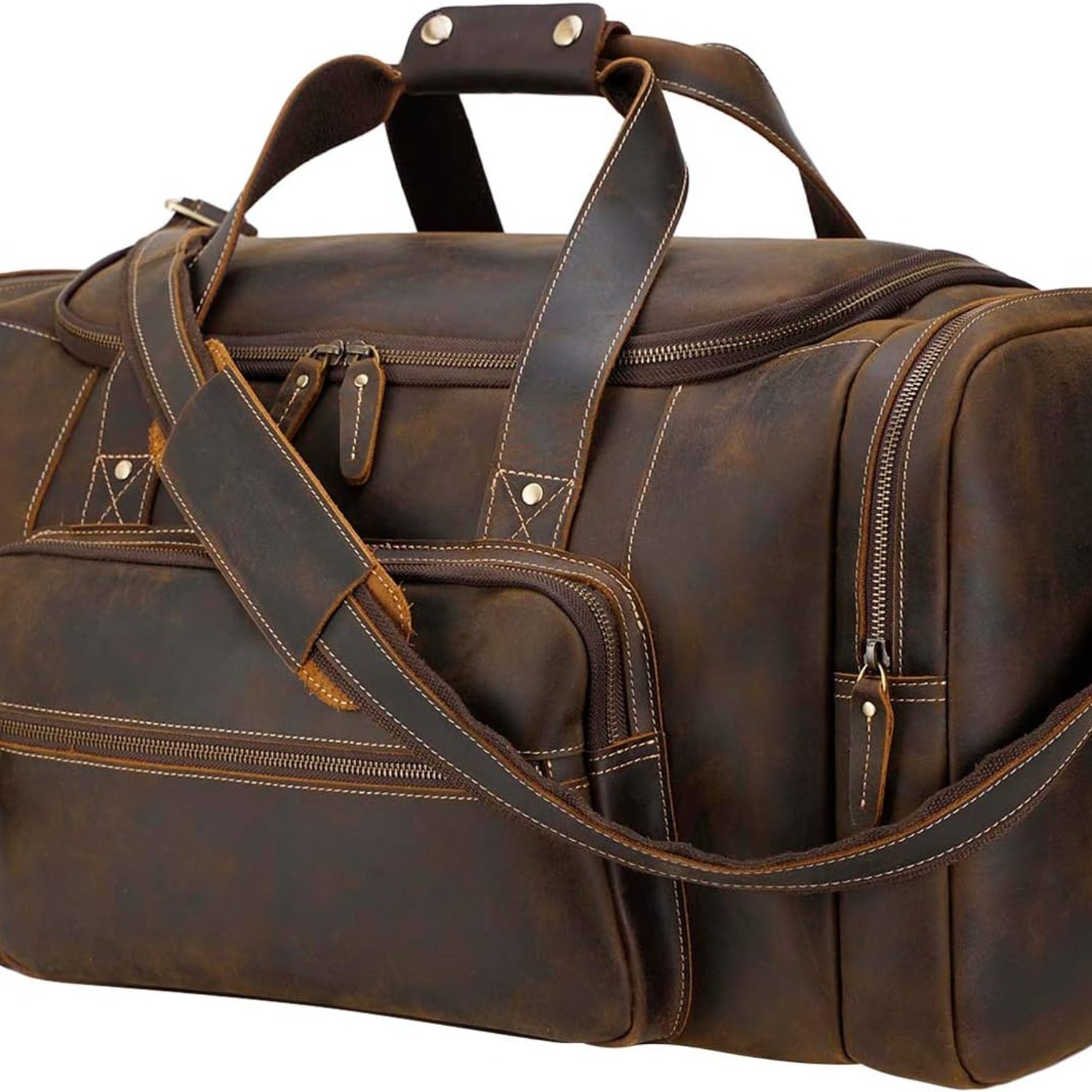
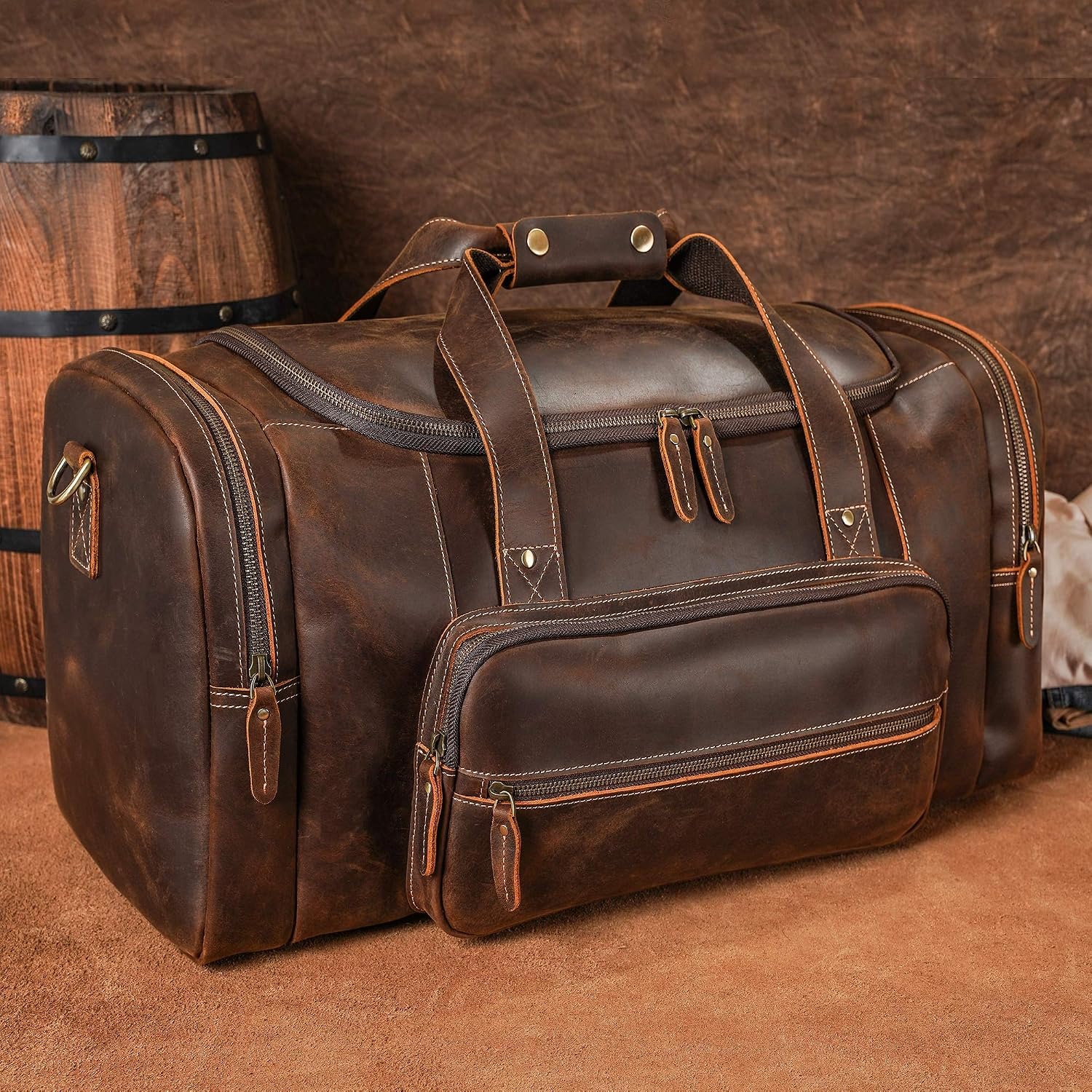
This duffle is full grain cowhide. Cowhide is thick and firm, which suits a bag that gets dropped, thrown in a car and loaded up past what the owner intended.
Why hardware matters more than you think
Ask anyone who repairs bags and they will tell you the leather is almost never the part that fails. It is the zipper, the stitching at the handle roots and the strap hardware.
This bag uses YKK metal zippers. YKK is the zipper most leather workshops specify by name, and the reason is consistency. The teeth stay aligned under sideways pull, which is exactly what happens when you overpack a duffle and tug the slider around a corner. A cheap zipper in that moment splits behind the slider.
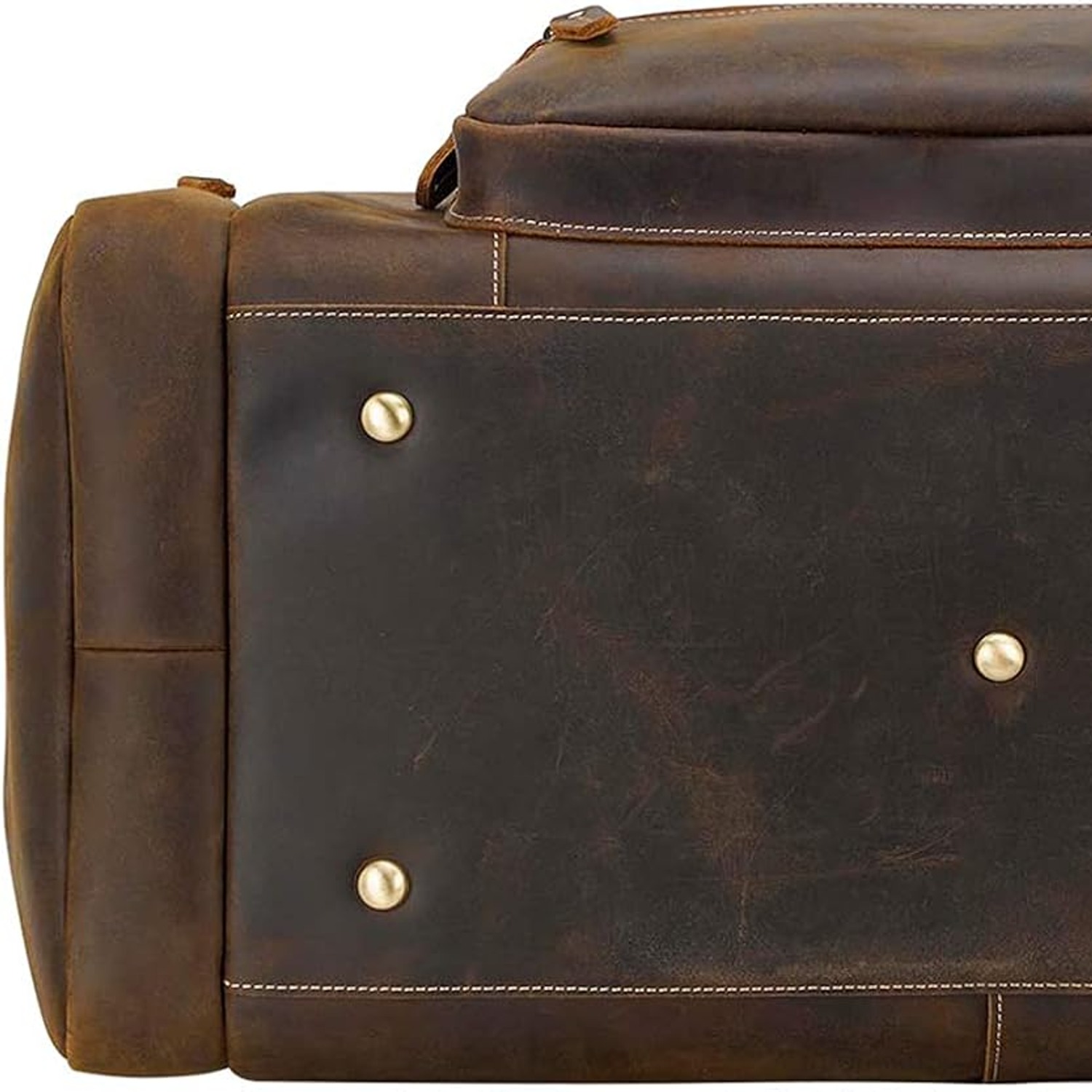
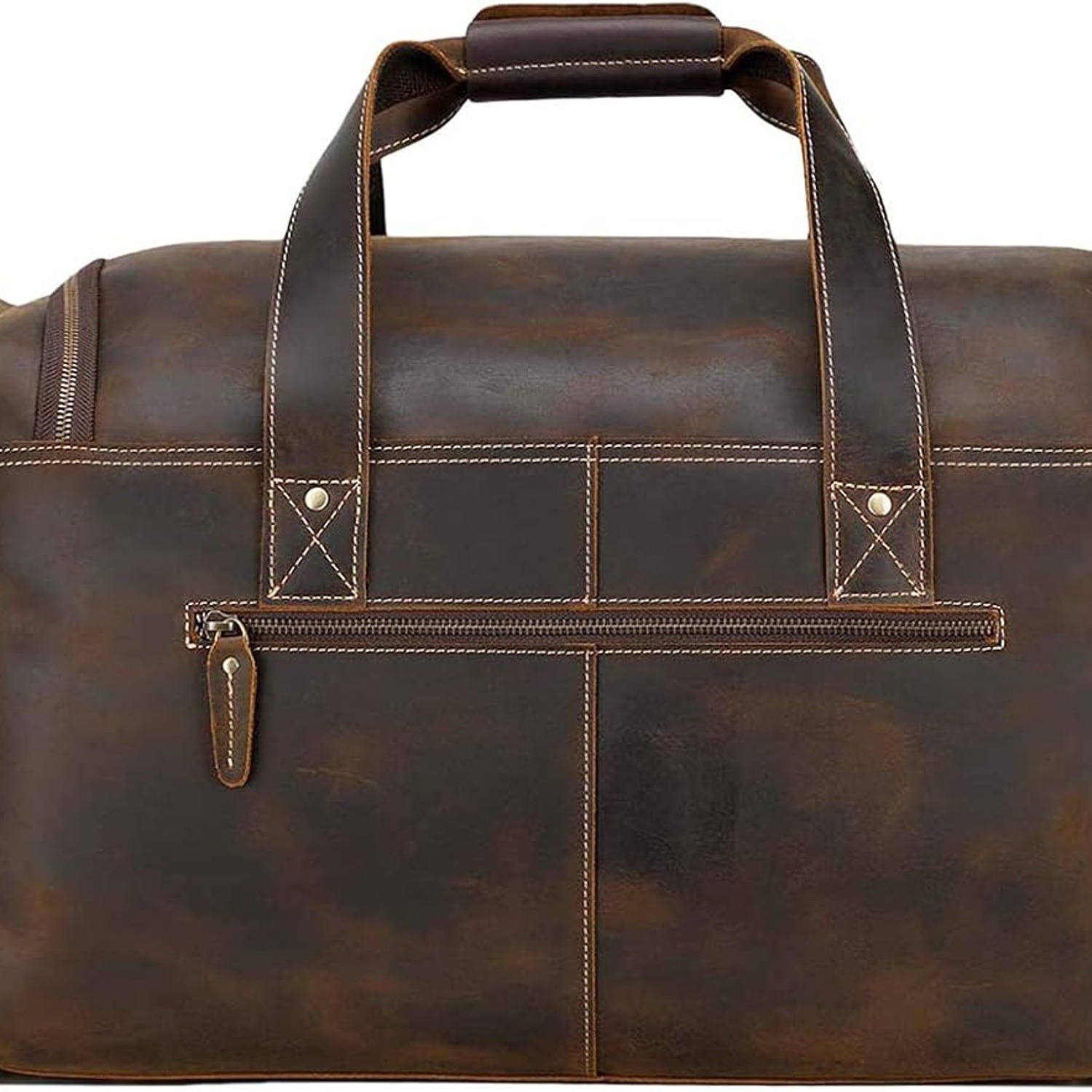
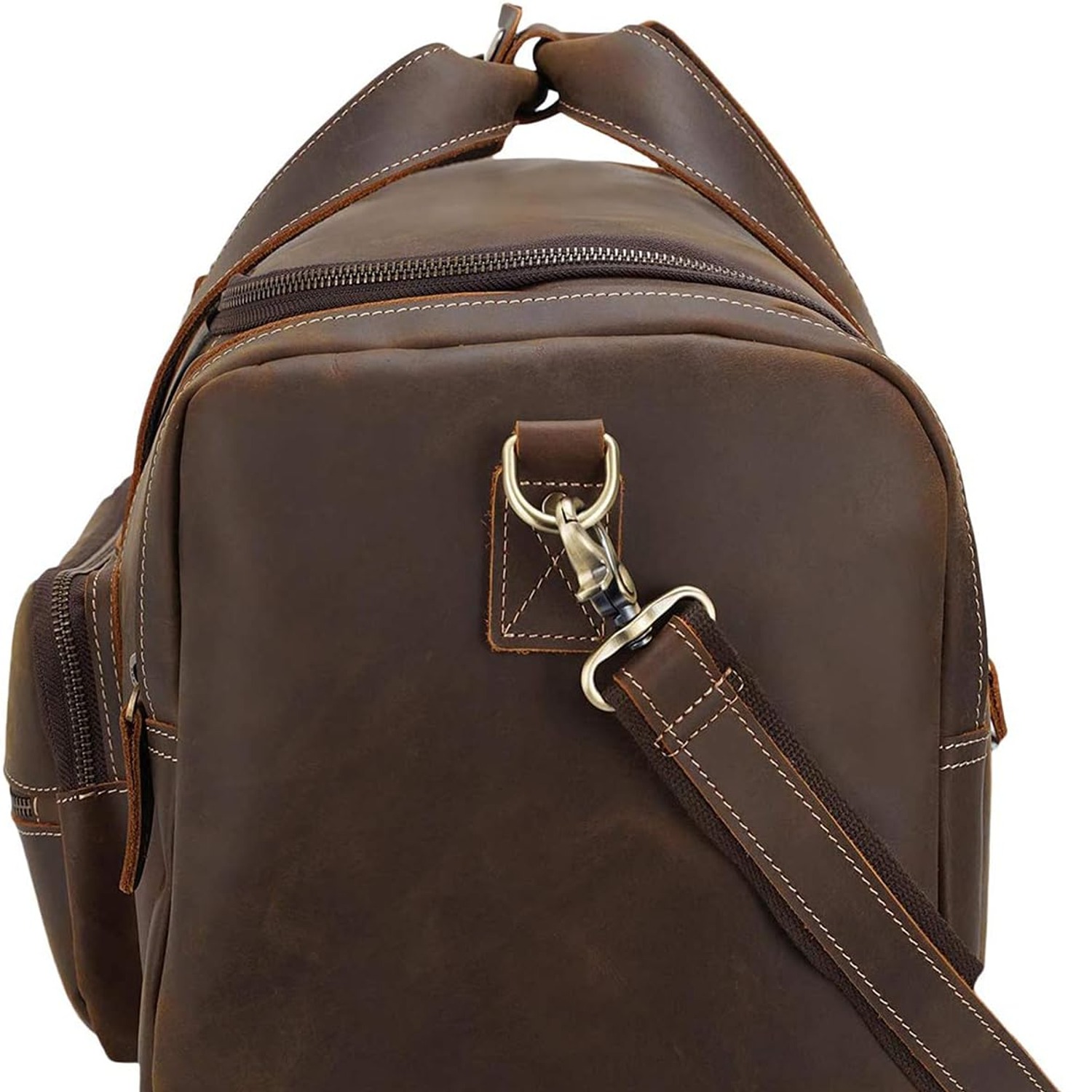
The bag also uses durable metal snaps and customised hardware, with strong stitching through the stress points. If you are comparing two leather duffles at similar prices, look at the zipper brand and the stitch density at the handle attachment first. That tells you more than the leather description does.
Sizing it properly
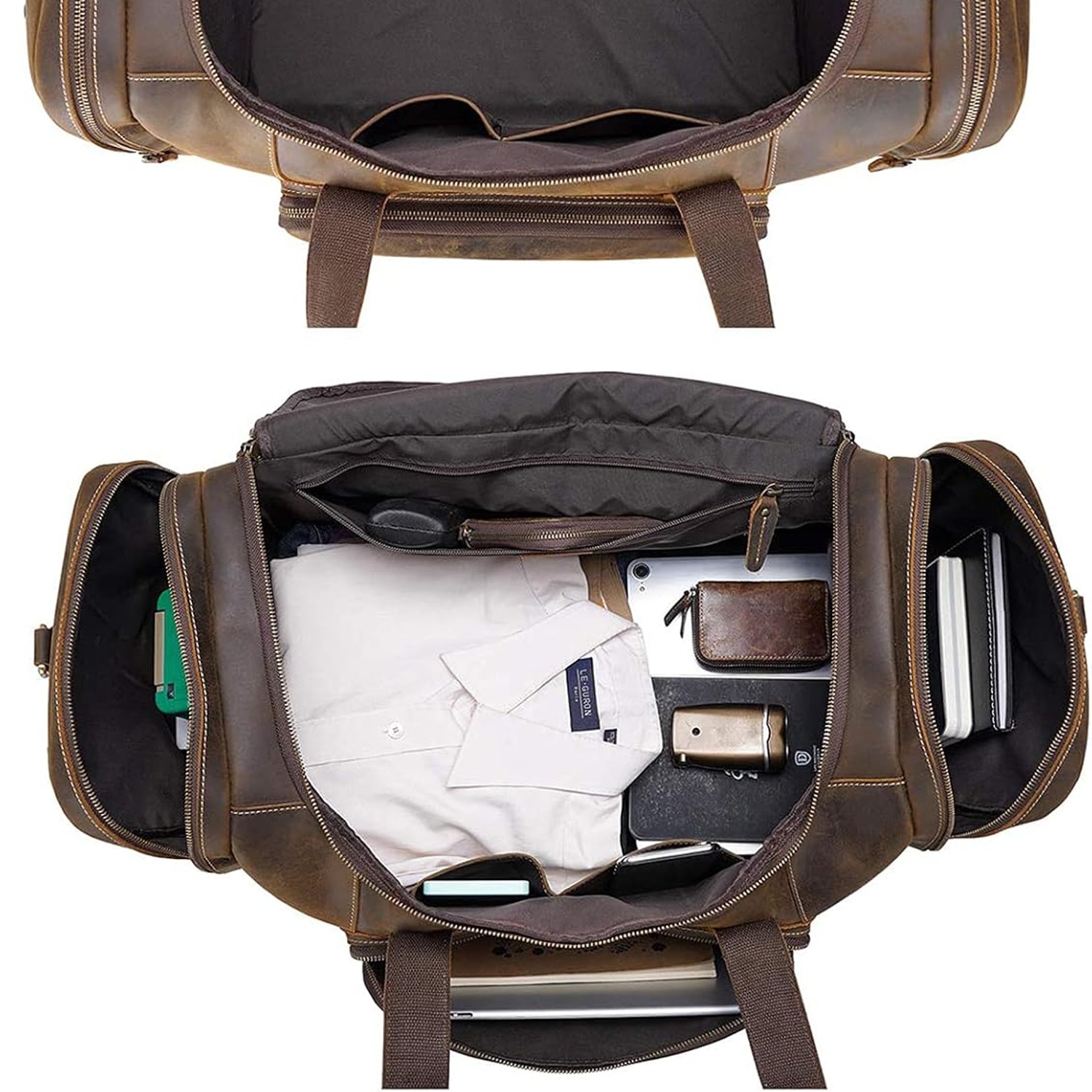
The dimensions here are 23 inches long, 9.8 wide and 10.6 high. That is a true weekender footprint. In practice it means two to three days of clothes for most people.
A realistic pack looks like two shirts, a spare pair of trousers, a jumper, underwear and socks, a wash bag, and a pair of shoes in a cloth bag. Add a laptop in its own sleeve and you are still fine. Roll your clothes rather than folding them and you will gain a surprising amount of room.
The bag weighs about 4.85 pounds empty, or 2.2 kg. Real leather has weight, and that is the trade. If you fly with a carrier that counts carry-on weight strictly, start your packing maths from that figure rather than from zero. Check your airline's current size and weight rules too, because they change and they vary a lot between countries.
The pockets, and why three is the right number
Big empty duffles are frustrating. Everything ends up at the bottom, and finding a charger means unpacking half the bag at a security line.
This one has a front pocket and two side pockets. The front pocket is the one you actually use: boarding pass, keys, phone, passport, a notebook. The side pockets are shaped for a water bottle on one side and an umbrella or a cable pouch on the other, which keeps wet and awkward items out of your clothes.
That is enough organisation without turning the bag into a compartment maze. If you want finer sorting, use two or three packing cubes in the main space and you have a flexible system that changes with the trip.
Carry options
Twin handles cover most of your carrying. They are the right choice for car parks, short walks and lifting into an overhead locker.
The shoulder strap detaches and adjusts with a buckle. Run it long and it works cross-body, which is what you want on stairs, on a bike or when you are holding a coffee and a phone at the same time. Shorten it and it sits on one shoulder over a suit without riding up. Take it off entirely and the bag looks cleaner, and there is nothing dangling when you stow it.
That flexibility is why a duffle beats a hard case for short trips. A case gives you one way to move it. This gives you three.
Who it suits
If you travel one or two nights at a time for work, this is a good fit. The shape reads as smart rather than sporty, and it will not look out of place next to a suit.
If you want a leather gym bag that does not look like gym kit, it also works, provided you keep damp clothes in a separate waterproof pouch inside and let the bag air afterwards.
If you are shopping for a gift, leather duffles are one of the few items in this category with broad appeal across ages and tastes. The cotton dust bag it arrives in makes it presentable straight out of the box.
If you regularly travel for a week or more, or you check luggage on every flight, a larger case will serve you better. This is honest about what it is, a weekender.
Looking after it
Leather care sounds fussy and is not. Four habits cover nearly everything.
Wipe it down with a soft dry cloth after each trip, before dust works into the grain. If something spills, blot it rather than rubbing, and let it dry at room temperature away from radiators and heaters. Direct heat is what makes leather go stiff and crack.
Condition it once or twice a year with a leather conditioner suited to full grain. Thin layer, soft cloth, let it soak in, buff off the rest. This replaces the natural oils that evaporate over time and keeps the hide flexing instead of splitting.
Store it in the cotton dust bag it comes with. Cotton breathes, plastic does not, and trapped moisture is the main cause of mould and mustiness in stored leather. Pack the bag loosely with paper or a soft towel so the sides keep their shape on the shelf.
Expect the colour to shift. Full grain darkens and deepens with handling and light. The marks you collect are not damage, they are the thing people pay extra for.
The short version
A duffle is a simple object, so the quality lives in four details. Full grain leather rather than coated or bonded. YKK metal zippers rather than unbranded ones. Stitching and hardware at the handle and strap points. A size honest enough to match the trips you actually take.
This bag covers all four. At 23 x 9.8 x 10.6 inches it holds a weekend without being unwieldy, it carries three ways, and it is built from the part of the hide that improves with age rather than wearing through. Buy it once, condition it occasionally, and it should outlast the synthetic bags you have replaced so far.